
Quick Summary
If you can perform at work but come home and have trouble doing tasks around the house or answering texts, the problem is likely not a shortage of willpower. Complex post-traumatic stress disorder, which often develops after prolonged or repeated trauma, can dysregulate the nervous system in ways that make ordinary follow-through feel out of reach. External structure can lower that load in ways internal motivation often cannot. For some people, weekly therapy is not enough, and a higher level of care can fill the gap with that extra structure.
Daily-function collapse in CPTSD is often a nervous-system pattern.
Self-blame and “lack of motivation” are frequent symptoms.
Predictable external structure can reduce the decision load trauma makes unbearable.
When routines keep collapsing at home, structured care may provide steadier structure.
What Complex PTSD (CPTSD) Does to Daily Function
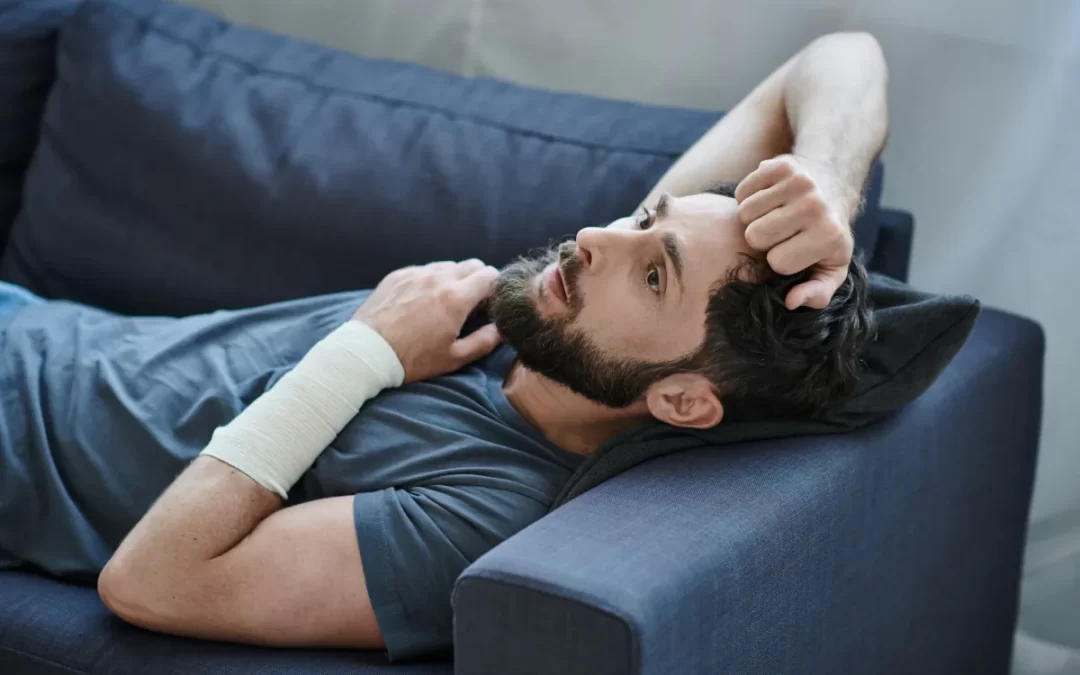
At work, people expect specific things from you, at specific times, and the shape of the day is often decided for you. But when you get home, that disappears. The dishes, the laundry, the appointment you meant to schedule three weeks ago, all of it is there while you sit on the couch, aware of every item yet able to touch none of them.
Complex post-traumatic stress disorder tends to follow trauma that was prolonged or repeated, often beginning in childhood or in a relationship you could not leave. The ICD-11 describes it as including the core features of PTSD plus lasting difficulties with emotion regulation, self-worth, and relationships. The National Center for PTSD notes that these functional impairments can be significant and persistent, touching areas that have nothing obvious to do with the original trauma.
While single-incident PTSD often organizes around one identifiable memory and its triggers, CPTSD tends to be more diffuse. It can settle into the background of how you go about an ordinary day. If you are noticing this most sharply right now, it may help to know that trauma symptoms can flare during life changes, when even welcome stress adds load to a system already running hot. Learning what CPTSD treatment in Marin County actually involves can make what comes next feel less abstract.
Why Motivation Fails as a Strategy for CPTSD
For many people, blaming yourself for motivation failing you is not an accurate read of who you are. Chronic trauma can keep the nervous system in states that were not built for errands. Some hours you may be restless and scanning, unable to settle enough to begin. Other hours, the system can pull the opposite direction into shutdown, where your body goes heavy and flat and the couch may as well have a gravity of its own. Motivation does not reach either of those states easily.
A peer-reviewed review of trauma and self-regulation describes how chronic stress can tax the same executive systems you use for planning, initiating tasks, and holding attention. If you spend eight hours holding yourself together in meetings, you may be spending the same resource required for doing tasks at home, and by then you are already running low on it. The problem is that your decision-making capacity is finite, and it may have been gone before you got home.
This is often why the advice of “try harder” makes things worse. Each failed attempt can add a layer of shame, which tends to raise baseline arousal and therefore drains the resource further. You can end up with less capacity than you started with and more evidence for the story that something is wrong with you.
How External Structure Regulates a Dysregulated Nervous System
A dysregulated nervous system often calms down when the environment becomes predictable. When you wake up at the same time and know what the next block of the day holds, your system can stop spending energy on figuring out what happens next. That question becomes exhausting when your threat system is already sensitized.
Structure often helps because it moves decisions out of your head. A fixed wake time removes the negotiation you would otherwise have with yourself every morning, and a shared meal at noon means lunch happens whether or not you could have organized it alone. A scheduled block of activity carries you into the next thing without requiring you to generate the momentum yourself.
Structure built with calm, regulated people can help your own system settle. That kind of co-regulation is hard to manufacture alone at your kitchen table late at night. It tends to come from being in a shared, organized space with others who are also doing the same work you are. Over time, an external rhythm can become a rhythm your body starts to expect, which is often where the first steadiness returns.
Signs Your Daily Structure Needs More Than Weekly Therapy
Weekly therapy gives you one hour to make sense of things, and for many people it is enough. But sometimes an hour a week cannot hold the rest, and there are patterns that can signal you need more structure than a single appointment offers.
Basic Self-Care Slipping in Ways That Used to Be Automatic
Watch for if the basics like meals and showers are slipping in ways that used to be automatic. You also want to notice whether the shutdown is escalating or the recovery from a hard day is taking longer than it used to.
Routines That Keep Collapsing When You Try to Sustain Them Alone
Pay attention, too, to what happens when you try to sustain a routine on your own. If you can start one but it dissolves within days repeatedly, it can mean the load is heavier than any one person can carry through willpower. When your ability to keep daily life running has narrowed to what you can barely manage in private, and when that margin keeps shrinking, it may be worth considering a level of care that supplies the structure directly.
In our clinical experience, many people with CPTSD arrive looking capable from the outside. They hold demanding jobs, meet deadlines, and answer emails on time, all the while there is a slow erosion of the ordinary tasks that keep a home running. What often shifts things tends to be external structure arriving first, with motivation returning gradually only after the load has come down.
How Structured Trauma Treatment Rebuilds Daily Function
Structured programs often work partly because they hand you the tools for you to build routine when you cannot do it alone right now. A partial hospitalization program (PHP) typically runs most of the day, several days a week, so the shape of your hours is decided in advance and your only job is to arrive. An intensive outpatient program (IOP) offers fewer hours, often built around work or family, providing rhythm and support while you carry more of the day yourself.
Inside those frames, the actual trauma work often becomes more possible because you are not spending everything you have just to show up. Care grounded in trauma-informed care means the approach is built around how trauma affects the body and the sense of safety. Skills-based work such as dialectical behavior therapy (DBT) can help with the emotion regulation that CPTSD often disrupts, and processing approaches such as eye movement desensitization and reprocessing (EMDR) may be introduced once there is enough stability to hold them.
At Rosebay Behavioral Health, the movement between levels of care is meant to track your actual capacity. As your own rhythms steady, external structure can be loosened gradually so that routine shifts to something you increasingly hold on your own. The aim is to create a nervous system that is settled enough for the structure to eventually becomes yours.
Getting CPTSD Treatment in Marin County at Rosebay
If you have read this far and recognized yourself, a conversation with people who can help you see clearly what level of support your situation actually calls for. At Rosebay Behavioral Health, that often starts with an assessment conversation about what your days look like, where function is slipping, and what has and has not helped so far. From there, the aim is to match you with the level of care that fits, whether that is PHP, IOP, or something you move into and out of over time. Our program serves people across Marin County, including San Anselmo.
You do not have to have this figured out before you reach out. If daily life has narrowed to what you can barely hold, that can be reason enough to ask for help Talk with our admissions team about a trauma assessment.
If you are ever in crisis or thinking about harming yourself, you can call or text the 988 Suicide and Crisis Lifeline, available around the clock.
Sources
World Health Organization. “6B41 Complex post traumatic stress disorder.” ICD-11 for Mortality and Morbidity Statistics.
U.S. Department of Veterans Affairs. “Complex PTSD: History and Definitions.”
Vawter-Lee MM, et. al. “Clinical Reasoning: A neonate with micrognathia and hypotonia.”